In this guide
Separate the measured shelf from the product specifications
Suppose two shelves each have a clear opening 35.5 inches wide, 15 inches deep, and 11.5 inches high. These shelf measurements are hypothetical. The aim is one front row, one layer, with each bin removable without moving another. Reserve 1/2 inch at both outer edges and between adjacent bins on every axis.
The bin dimensions below come from Sterilite’s current model 2242 and 2243 product pages, checked on October 16, 2026. They are manufacturer dimensions, unlike the invented shelves and prices in this example. Match the model number when shopping; a similar capacity label does not establish the same dimensions.
| Model | Nominal capacity | Outside | Inside at bottom |
|---|---|---|---|
| Sterilite 2242 | 6 qt | 13.5 × 8 × 4.625 | 11.5 × 6 × 4.25 |
| Sterilite 2243 | 12 qt | 16.375 × 11.25 × 5.375 | 13.875 × 9.125 × 4.75 |
Check the small bin in the orientation you will use
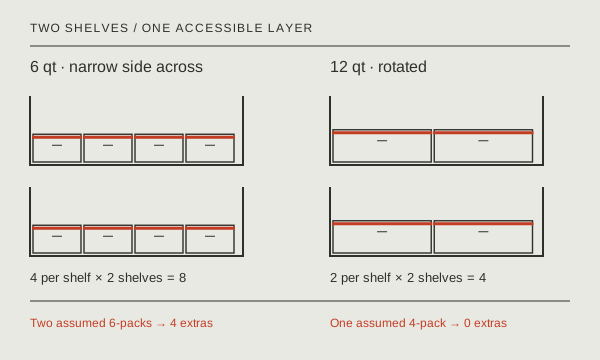
Place the 6-quart bin with its 8-inch side across the shelf and its 13.5-inch side pointing back. Four bins need 4 × 8 + 5 × 0.5 = 34.5 inches of width. There are five clearance gaps: one at each end and three between bins. One row needs 13.5 + 2 × 0.5 = 14.5 inches of depth. One layer needs 4.625 + 1 = 5.625 inches of height.
That gives four independently accessible bins per shelf, or eight across both shelves. This is the purchase target for this project.
The calculator’s full geometric grid can fit two layers: 2 × 4.625 + 3 × 0.5 = 10.75 inches high. Its grid total is therefore 4 × 2 × 1 = eight bins per shelf. That eight is not the same quantity as eight front-row bins across two shelves. Select the intended access arrangement before ordering; a geometric fit does not establish a safe loaded stack.
Rotate the larger bin before rejecting it
With its 11.25-inch side across and 16.375-inch side pointing back, the 12-quart bin fails the depth check: 16.375 + 1 = 17.375 inches exceeds the 15-inch opening. Rotate it 90 degrees so the 16.375-inch side runs across the shelf.
Two rotated bins need 2 × 16.375 + 3 × 0.5 = 34.25 inches of width. Depth becomes 11.25 + 1 = 12.25 inches; one-layer height is 5.375 + 1 = 6.375 inches. The result is two bins per shelf, four for both shelves. Two layers would need 12.25 inches of height and would not fit.
The alternatives each place a nominal 48 quarts on the shelves: eight times six, or four times twelve. They offer different compartment sizes and are not equivalent usable interior volumes. A hypothetical rigid item measuring 12 × 8 × 4 inches laid flat exceeds the small bin’s listed bottom dimensions. It is within the larger bin’s listed dimensions, but curved corners, the lid, and the object’s shape still need a sample check.
Round the required count to complete retail packs
Assume a retailer sells the small bins in six-packs for $12 and the large bins in four-packs for $20. These are invented retail offers, not observed prices or the manufacturer’s factory case packs.
Eight small bins require ceil(8 ÷ 6) = two packs. You buy twelve, place eight, and have four left over. Four large bins require one four-pack. The lower per-bin price therefore produces the higher merchandise total for this particular arrangement.
Keep shipping and tax blank until confirmed; $24 and $20 are merchandise amounts, not checkout totals. Extra small bins may be useful elsewhere, but do not subtract an imagined resale value. If a seller offers singles, add that actual offer as another candidate.
| Option | Needed | Assumed pack | Buy | Extras | Merchandise |
|---|---|---|---|---|---|
| 6-quart bins | 8 | 6 for $12 | 2 packs · 12 bins | 4 | $24 |
| 12-quart bins | 4 | 4 for $20 | 1 pack · 4 bins | 0 | $20 |
Try one loaded bin before buying the set
Check the full removal path, including doors, hinges, shelf lips, and fingers under the lid. Confirm the shelf’s own load rating and anchoring instructions. CPSC’s Anchor It guidance concerns furniture tip-over prevention; it does not certify this shelf or calculate its capacity.
References & further reading
Examples are for planning. Check the product instructions and local requirements for your project. How we prepare these guides.
Put your measurements to work