Empty the washer, remove debris from the accessible door seal, clean the removable detergent drawer, and run the correct empty-machine cleaning cycle. Dry the seal afterward and unload the next wash promptly. If water remains in the drum, a drain error appears, or the machine leaks, resolve drainage before repeating cleaner cycles.
In this answer
Start with an empty drum and a drainage check
Start with the empty washer. Water left in the drum or a drain error means drainage comes first. If only the clothes are unusually wet, check whether the washer finished its spin. An interrupted or unbalanced spin can leave wet laundry even when the pump is working.
Smell the empty machine and the laundry separately. A musty gasket or drawer needs cleaning. Odor in just one type of fabric points back to that load’s washing and drying. For a washer that drains normally, gather two soft cloths, warm water and a soft brush. Switch off and disconnect power before hands-on cleaning. Leave stacked machines and the cabinet in place.
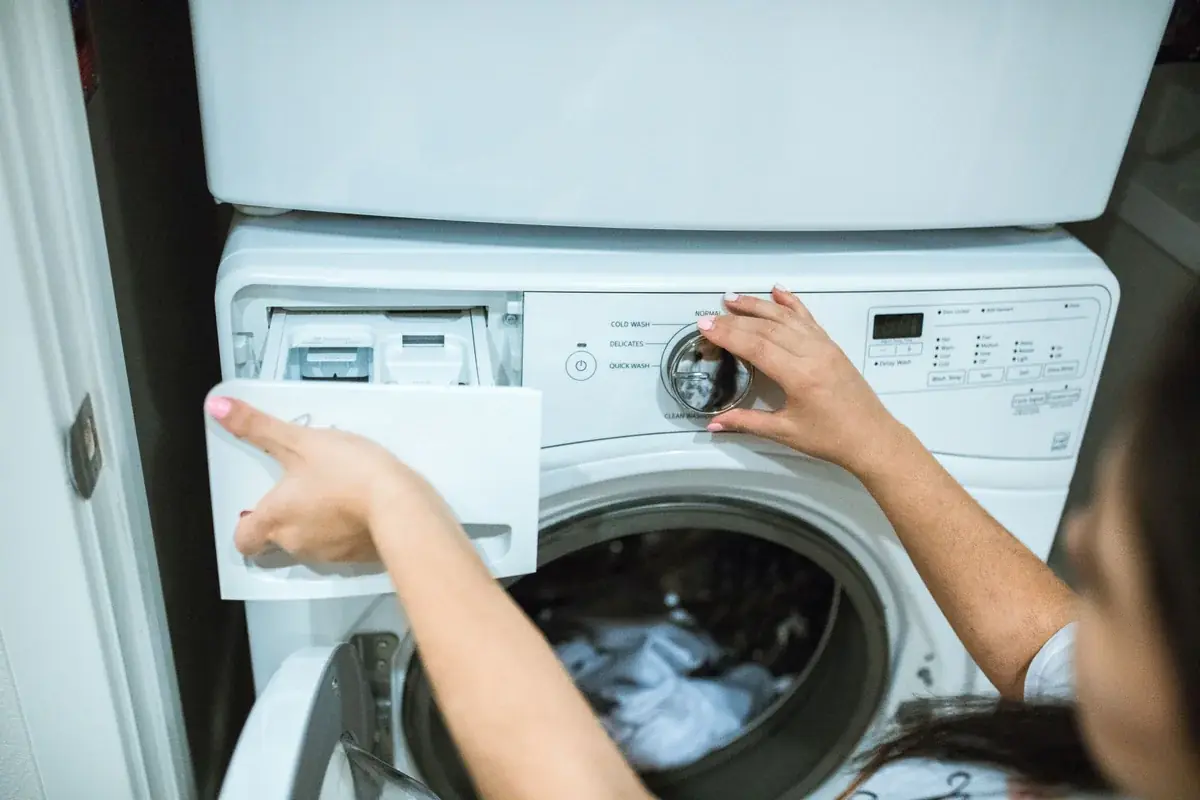
Wipe the gasket folds and the door that closes against them
Start with a damp cloth inside the reachable rubber folds. Whirlpool’s seal guide also uses mild detergent and warm water for stuck-on residue. For another model, check its seal-care instructions before adding a cleaner. Keep tools out of the drain holes and the edge that holds the seal in place.
Lift out hair, lint and small objects, then wipe away slippery buildup. A stain left in otherwise clean rubber is a different problem from removable dirt. Scrubbing harder can damage the seal. A tear or persistent leak needs repair.
- Gently open the reachable gasket fold and lift out loose lint, hair and objects without tools.
- Wipe the folds, lower lip and inside door glass where it meets the seal. Turn the cloth as it collects dirt.
- If an allowed cleaner was needed, remove it with a fresh water-dampened cloth. Dry the folds with the second cloth.
Clear the dispenser before adding another product
Look for the drawer’s release tab before pulling past its stop. Photograph the inserts while they are assembled so you can put them back correctly. An automatic-dosing reservoir can have a separate cleaning procedure and may stay in place.
On the removable LG drawer shown in its guide, press the release, lift out the detachable inserts, and wash them with warm water and a soft brush. Brush residue from corners and openings, rinse, and put the pieces back in their original positions. Keep the pieces out of the dishwasher: LG warns that its heat can distort them. Other drawers can have fixed compartments or a different release.
If product remains pooled after the next normal cycle, check insert seating and whether liquid or powder is in its designated compartment. A clean drawer that repeatedly fails to dispense needs support rather than extra detergent poured into the drum.
Run one correctly prepared tub-cleaning cycle
Reassemble the drawer and reconnect power. Keep the drum empty and use one cleaning product at a time. Check four details on the washer and cleaner instructions: product, dose, placement and cycle. A tablet intended for the drum belongs there, not in the drawer.
With affresh washing-machine-cleaner tablets, place one tablet in the empty tub and select Clean Washer. If the washer has no cleaning cycle, affresh specifies Normal or Heavy with hot water where the washer allows it. Wipe out remaining residue when the cycle ends.
For heavy buildup, affresh allows up to three consecutive treatments. If that sequence leaves the same odor, check the remaining symptom below. More products will not clear a blocked drain or repair a leaking seal.
Still smells? Compare the machine with the next load
After cleaning and wiping out residue, check an ordinary load with the correct HE dose. Remove and dry the laundry promptly; compare both the empty machine and the freshly dried fabric.
Scroll across to read every column.
| Result | Next action | What to watch for |
|---|---|---|
| Machine and freshly dried laundry smell normal | Unload promptly and dry accessible gasket moisture | Return to the model's maintenance interval |
| Empty machine improves; one textile type still smells | Follow those items' washing labels and dry fully | Check that textile’s care and drying routine |
| Water remains or a drain error appears | Use the owner drain-filter procedure only if provided | Service if inaccessible, leaking, or still failing to drain |
| Odor is noticeable around nearby plumbing too | Ask the property manager or plumber to check drainage | A drain problem can sit outside the washer |
| Odor persists after the allowed cleaner sequence | Contact support with model and completed care steps | The same odor after cleaning needs a different diagnosis |
Water in the drum points to the drain
A pump filter can hold trapped objects, but opening it can release retained water. Find the model’s pump-filter procedure before loosening the cap: it should show how to let hot water cool, drain it into a container and reseal the filter. Some washers have no owner-accessible filter. GE also identifies drain-hose installation as an odor source, so persistent drainage trouble deserves a hose and plumbing check rather than another tub-cleaning cycle.
After normal washes, unload promptly and dry the accessible gasket folds. Use the machine’s closed-door ventilation feature if it has one. Leaving a door ajar is an option only where children and pets cannot enter.
Check the dose going into each wash.
Read the HE detergent guideSources
- Whirlpool: How to Clean a Washing Machine ↗
Routine cleaning of the washer door and gasket.
- Whirlpool: Cleaning a Front Load Washer Door Seal ↗
Removing loose debris and stuck-on residue from the door seal.
- LG: Front Load Washer Maintenance ↗
Removing, washing and refitting the dispenser drawer and inserts.
- affresh: How to Clean Your Washer ↗
Tablet placement, cycle selection and the three-treatment limit for heavy buildup.
- GE: Front Load Washer — Odor in Tub ↗
How pump-filter debris and drain-hose installation can contribute to odor.